Category: Branded Residences

  • Buying a Branded Residence in 2026: 10 Things to Check Beyond the Brand Name

    Buying a Branded Residence in 2026: 10 Things to Check Beyond the Brand Name

    A luxury brand attached to a residential project can make the property feel more exclusive and desirable. But when buying a branded residence, the brand name should be the starting point of your research, not the only reason to invest.

    Branded residences combine premium real estate with the identity, design standards, services, or management of a recognised hospitality, lifestyle, fashion, or luxury brand. They can offer a distinctive living experience, but they often come at a higher purchase price and may involve higher recurring costs.

    For buyers comparing branded residences for sale in 2026, the key question is whether the brand creates enough real value to justify the premium.

    Here are 10 important factors to review before making a decision.

    1. Understand the Brand’s Actual Involvement

    Before evaluating a project in detail, buyers should first understand what branded residences are and how they differ from conventional luxury housing. This makes it easier to judge whether the brand is genuinely contributing to design, services, management and long-term value, or simply adding a premium to the purchase price. 

    In some developments, the brand may be actively involved in design, interiors, hospitality standards, resident services, and property management. In others, the developer may mainly use the brand name under a licensing agreement.

    Before buying, understand whether the brand is involved in:

    • Architecture or interior design
    • Service and hospitality standards
    • Property management
    • Staff training
    • Amenity planning
    • Resident experiences
    • Quality control

    A buyer paying a substantial premium should ideally receive more than a recognised name on the entrance.

    Ask the developer to clearly explain what the brand will manage or influence after possession.

    2. Check the Duration of the Brand Agreement

    The property may be owned for decades, while the branding agreement may have a fixed duration.

    This is an important long-term consideration because part of the property’s value may depend on its continued association with the brand.

    Buyers should understand:

    • How long the agreement lasts
    • Whether it can be renewed
    • What happens if the brand exits
    • Whether another operator can replace it
    • Whether services would change
    • Whether the property could continue using the brand name

    For long-term investors, brand continuity can influence both ownership experience and future resale positioning.

    3. Evaluate the Developer Separately

    A prestigious brand does not remove the need to investigate the developer.

    The developer remains responsible for construction, delivery, execution, and many aspects of the final product. A strong branded residence should combine a respected brand with a developer that has a reliable delivery history.

    Review:

    • Completed projects
    • Delivery timelines
    • Construction quality
    • Customer feedback
    • Legal history
    • Financial credibility
    • Experience in premium developments

    A luxury brand may set standards, but the developer still needs to deliver them.

    4. Compare the Price With Similar Luxury Apartments

    Branded residences frequently sell at a premium compared with conventional luxury apartments in the same market.

    The important question is whether that additional cost is justified.

    Compare the branded project with nearby modern luxury apartments based on:

    • Price per square foot
    • Carpet or usable area
    • Location
    • Floor plans
    • Construction quality
    • Amenities
    • Maintenance charges
    • Developer reputation
    • Rental potential
    • Resale demand

    If the branded property provides significantly better services, professional management, superior design, exclusivity, and long-term operating standards, the premium may make sense.

    If the difference is mainly the brand name, buyers should be more cautious.

    5. Understand Which Services Are Included

    One of the major attractions of luxury branded residences is hospitality-style living.

    Depending on the project, services may include concierge assistance, housekeeping, valet parking, wellness facilities, guest management, security, dining, or maintenance support.

    However, not every service is necessarily included in regular maintenance charges.

    Buyers should understand the difference between:

    • Services included in standard fees
    • Optional paid services
    • Amenities available only under certain conditions

    Ask for a clear service schedule before buying. This helps prevent unexpected ownership costs later.

    6. Calculate the Full Cost of Ownership

    The purchase price is only one part of the financial commitment.

    Branded properties may involve higher recurring expenses because of professional management, premium amenities, and hospitality services.

    Review costs such as:

    • Annual maintenance
    • Common-area charges
    • Management fees
    • Club or amenity fees
    • Housekeeping
    • Reserve funds
    • Parking
    • Optional services

    This is especially important for investors.

    A property may appear to generate attractive rental income, but the actual net return can be significantly lower after maintenance, vacancy, taxes, and management expenses.

    Evaluate the property using realistic net income rather than advertised rent alone.

    7. Judge the Location Without the Brand Name

    Location remains one of the most important fundamentals in real estate.

    A useful question is:

    Would this property still be attractive if the brand name were removed?

    Evaluate:

    • Road and metro connectivity
    • Access to employment hubs
    • Airport connectivity
    • Schools and hospitals
    • Retail and lifestyle infrastructure
    • Planned developments
    • Neighbourhood quality
    • Rental demand
    • Future luxury supply

    A strong brand can enhance a good location, but it cannot permanently compensate for weak infrastructure or poor demand.

    For investors, location will continue to affect rental income, appreciation, and resale liquidity.

    8. Read the Legal and Service Agreements

    Marketing materials explain the lifestyle being promoted. Legal agreements explain what the buyer is actually entitled to receive.

    Review documents relating to:

    • Property purchase
    • Brand involvement
    • Service commitments
    • Maintenance
    • Rental management
    • Resale restrictions
    • Leasing conditions
    • Common-area usage
    • Brand termination

    Buyers should also confirm whether important services are legally documented or simply mentioned in promotional material.

    For a high-value purchase, independent legal review is advisable.

    9. Assess Rental Potential Realistically

    A recognised brand may improve tenant interest, but it does not guarantee high rental income.

    Rental performance depends on several factors:

    • Location
    • Unit size
    • Local rental demand
    • Comparable rents
    • Vacancy levels
    • Furnishing standards
    • Maintenance charges
    • Management fees

    If the project offers a rental-management programme, understand its structure carefully.

    Review:

    • Management fees
    • Revenue-sharing terms
    • Owner usage restrictions
    • Rental distribution
    • Minimum stay conditions
    • Whether projected returns are fixed or variable

    The most useful figure for an investor is net rental income after expenses.

    10. Consider Resale Before You Buy

    Buyers often focus on the entry price and think about resale only years later.

    A better approach is to consider future buyer demand before purchasing.

    Ask:

    • Who is likely to buy the property later?
    • Will the brand remain desirable?
    • Will new branded projects reduce exclusivity?
    • Will maintenance costs remain manageable?
    • Will the project remain well maintained?
    • Is there a strong premium resale market nearby?

    Brand recognition can support resale, but long-term value will still depend on location, quality, demand, and operating costs.

    Branded Residence Buyer Checklist

    Before making a decision, make sure you clearly understand the following areas:

    Area What to Review
    Brand involvement What the brand actually manages or controls
    Brand agreement Duration and termination conditions
    Developer Track record and construction quality
    Price premium Whether additional cost is justified
    Services What is included and what costs extra
    Ownership costs Maintenance and management expenses
    Location Connectivity and future demand
    Legal terms Rights, restrictions, and obligations
    Rental potential Realistic net rental income
    Resale Future buyer demand and liquidity

    If several of these points are unclear, additional due diligence is advisable.

    Who Should Consider a Branded Residence?

    Branded residences may suit buyers who value professional management, premium services, exclusivity, and a more hospitality-led lifestyle.

    They can be particularly relevant for:

    • HNI and UHNI buyers
    • NRI property investors
    • Global professionals
    • Lifestyle-focused buyers
    • Investors seeking managed luxury property
    • Buyers wanting lock-and-leave convenience

    However, a conventional luxury apartment may be more suitable for buyers focused mainly on lower ownership costs, greater space, or better value per square foot.

    Is Buying a Branded Residence Worth It in 2026?

    A branded residence can be a strong purchase when three elements work together: a quality property, a credible developer, and meaningful brand involvement.

    The brand should strengthen the underlying real estate rather than compensate for weak location, high pricing, poor execution, or unrealistic investment projections.

    Before buying, compare the property with other luxury apartments, understand all recurring costs, review the legal agreements, and evaluate rental and resale demand independently.

    When reviewing branded residences for sale, the strongest opportunity is not always the project with the most famous name. It is the one where the developer, location, services, price, and brand combine to create sustainable long-term value.

    Frequently Asked Questions

    What should I check before buying a branded residence?

    Review the developer, brand involvement, agreement duration, services, maintenance costs, legal documentation, location, rental demand, and resale potential.

    Are branded residences more expensive than luxury apartments?

    They often carry a premium because of branding, design standards, services, professional management, and exclusivity. Buyers should compare that premium with similar luxury apartments in the same market.

    Does a branded residence guarantee higher returns?

    No. Investment performance still depends on purchase price, rental demand, operating costs, location, market conditions, and resale demand.

    Can branded residences be rented?

    Many can be rented, but rules differ between projects. Buyers should review leasing restrictions and any rental-management programme before purchasing.

    Are branded residences suitable for NRI buyers?

    They can appeal to NRIs because professional management may make remote ownership easier. Legal, tax, financial, and property-management considerations should still be reviewed carefully.

  • Branded Residences vs Luxury Apartments: Is the Brand Premium Worth It in 2026?

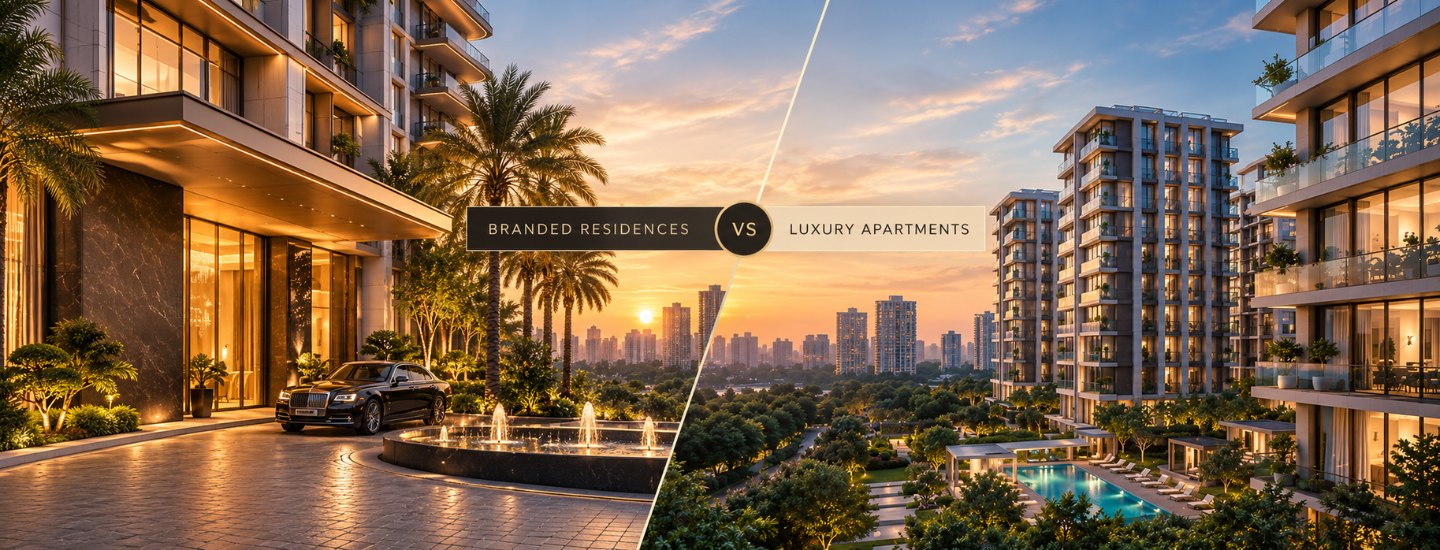
    Branded Residences vs Luxury Apartments: Is the Brand Premium Worth It in 2026?

    Luxury homebuyers in 2026 have more choices than ever. Alongside premium and modern luxury apartments, a growing number of developments now carry the names of global hospitality, fashion, automotive and lifestyle brands.

    Buyers exploring branded residences should compare not only the brand name but also the location, developer, services, management standards and long-term investment potential.

    The answer depends on what sits behind the branding.

    A well-structured branded residence can provide professional management, higher service standards, distinctive design, exclusivity and potentially stronger market positioning. But a luxury apartment in the right location, from a proven developer, may offer similar living quality at a lower acquisition and maintenance cost.

    The right choice therefore depends less on the logo and more on location, developer credibility, brand involvement, services, recurring costs and investment goals.

    What Is the Main Difference Between Branded Residences and Luxury Apartments?

    A luxury apartment is usually positioned around premium construction, location, amenities, design and exclusivity.

    A branded residence adds another layer: an association with a recognised hospitality, lifestyle, design, fashion or luxury brand. Depending on the project, that brand may contribute to design standards, resident services, property management, hospitality operations or the overall customer experience.

    Not every branded project follows the same model. In some developments, the brand remains actively involved after possession. In others, its involvement may be more limited.

    That distinction matters because buyers are often paying a sizable premium for the branded proposition.

    Branded Residences vs Luxury Apartments: Quick Comparison

    Factor Branded Residences Luxury Apartments
    Brand association Recognised hospitality/lifestyle/luxury brand Primarily developer-led
    Purchase price Usually carries an additional premium Usually lower for comparable location/specification
    Design Often follows defined brand standards Depends on developer and architect
    Services May include hospitality-style services Primarily residential amenities
    Property management Can involve professional or brand-led management Usually managed by developer/RWA/facility company
    Maintenance cost Often higher Generally comparatively lower
    Exclusivity Often highly curated Varies by project
    Rental appeal Can attract premium tenants in certain markets Strongly dependent on location and unit quality
    Resale value Brand may help, but does not guarantee premium resale Driven mainly by location, demand and project quality
    Buyer profile HNIs, UHNIs, NRIs, lifestyle and trophy-property buyers Wider premium housing audience

    How Much More Do Branded Residences Cost?

    The premium can be significant.

    Recent Indian market analysis indicates that branded residences commonly command around a 25-35% price premium over comparable non-branded luxury homes, although the difference varies significantly by city, project and brand.

    That premium is one of the main reasons buyers should compare a branded project with nearby luxury apartments rather than evaluating it in isolation.

    For example, if comparable premium residences in a location are priced substantially below a branded development, ask what explains the difference.

    Is the premium paying for:

    • superior construction specifications?
    • genuinely differentiated architecture and interiors?
    • professional property management?
    • concierge and hospitality services?
    • better amenities?
    • lower-density development?
    • brand-led operational standards?
    • stronger exclusivity?
    • or mostly the brand name?

    The premium becomes easier to justify when several of these advantages are genuinely present.

    Why Are Buyers Paying the Premium in 2026?

    India’s branded-residence market is expanding rapidly. KPMG reported in 2026 that India ranks sixth globally in branded residence projects, with the market valued at approximately USD 5 billion. The number of branded homes has reportedly increased by 55% over the previous five years.

    Several factors are driving this demand.

    1. Greater Trust and Quality Assurance

    Luxury property buyers are increasingly concerned about execution quality, maintenance and long-term project management.

    An established brand can provide an additional layer of confidence-but only when it has meaningful involvement in the development and operation of the property.

    2. Hospitality-Led Living

    Some luxury branded residences offer services that conventional apartments may not provide, including:

    • concierge assistance
    • valet services
    • housekeeping
    • wellness facilities
    • private dining
    • resident experiences
    • professionally managed common areas

    For buyers who actively use these services, branded living may offer genuine lifestyle value.

    3. Exclusivity

    A recognised global brand can help a development differentiate itself from dozens of competing luxury projects.

    That exclusivity can be particularly attractive to HNIs, UHNIs, global professionals and NRI buyers looking for a property with an internationally recognisable positioning.

    Does a Branded Residence Automatically Give Better Investment Returns?

    Investors should also examine branded residence rental yields after accounting for maintenance charges, management costs, vacancy and actual tenant demand.

    A branded residence may command a premium when purchased, but that does not automatically mean the same premium will be recovered at resale.

    Long-term property performance still depends heavily on:

    Location

    A prestigious brand cannot compensate indefinitely for poor connectivity, limited infrastructure or weak local demand.

    Developer quality

    The developer still needs to execute and deliver the project properly.

    Supply

    If numerous similar branded projects enter the same micro-market, scarcity can decline.

    Maintenance costs

    Premium services can result in higher recurring charges, reducing net rental returns.

    Rental demand

    Luxury branding only supports rental income if the market contains tenants willing to pay for that premium.

    Resale liquidity

    Future buyers will compare the residence against other premium properties available at the time.

    Recent buyer guidance similarly warns that branding alone does not guarantee proportionately higher resale value; location, layout, construction quality and market demand remain fundamental.

    When Is the Brand Premium Worth Paying?

    A branded residence can justify its premium when the brand meaningfully improves the underlying property.

    Before buying, evaluate these six questions.

    1. How Involved Is the Brand?

    Determine whether the brand is simply licensing its name or participating in areas such as:

    • architecture
    • interior design
    • service standards
    • property management
    • resident experience
    • quality control

    The deeper the involvement, the stronger the argument for paying a premium.

    2. Will the Brand Remain After Possession?

    A branded residence is a long-term asset.

    Buyers should understand how long the brand agreement lasts and whether the brand or hospitality operator will remain involved after the project is delivered.

    3. Are the Services Contractually Defined?

    Marketing brochures may highlight numerous lifestyle services.

    Check which services are actually included, which cost extra, who operates them and whether they are protected by contractual arrangements.

    4. What Are the Ongoing Costs?

    Premium amenities and hospitality services are not free.

    Compare annual maintenance and service charges with nearby luxury apartments before estimating the property’s real ownership cost.

    5. How Strong Is the Location Without the Brand?

    Ask yourself:

    Would I still consider buying this property if the luxury brand name were removed?

    If the answer is no, the investment may rely too heavily on branding.

    6. What Comparable Properties Can You Buy for the Same Budget?

    Compare the branded residence against other luxury properties based on:

    • price per square foot
    • usable area
    • location
    • construction quality
    • amenities
    • maintenance
    • rental potential
    • developer reputation
    • resale demand

    This makes the brand premium measurable rather than emotional.

    When Might a Luxury Apartment Be the Better Choice?

    A conventional luxury apartment may be more suitable when the buyer primarily wants:

    • a larger home for the same budget
    • lower recurring costs
    • a strong location
    • quality construction without hospitality services
    • greater choice of projects
    • less dependence on brand agreements

    A top-tier luxury apartment in a proven micro-market can still perform extremely well as both a home and an investment.

    The absence of international branding does not automatically make it an inferior asset.

    Branded Residences May Suit You If

    A branded residence can make sense if you value:

    • internationally recognised standards
    • professionally managed living
    • hospitality-style services
    • distinctive architecture or design
    • exclusivity
    • lock-and-leave convenience
    • premium lifestyle positioning

    It can also appeal to investors who believe the combination of brand, location, developer and limited supply will create sustained buyer and tenant demand.

    Luxury Apartments May Suit You If

    A traditional luxury apartment may make more sense if you prioritize:

    • value per square foot
    • lower service costs
    • more control over operating expenses
    • location over branding
    • larger unit size
    • straightforward residential ownership

    For many buyers, a well-selected luxury apartment can offer a better balance between lifestyle quality and financial efficiency.

    The 2026 Verdict: Is the Brand Premium Worth It?

    Sometimes-but the brand itself is not enough.

    A 25-35% premium can be reasonable when buyers receive measurable additional value through genuine brand involvement, superior specifications, professional management, differentiated services and a strong underlying location.

    It becomes harder to justify when the brand serves primarily as a marketing label.

    Investors should therefore evaluate branded residences using the same fundamentals they would apply to any investment property:

    location + developer + acquisition price + operating cost + rental demand + resale potential.

    The brand should strengthen those fundamentals-not replace them.

    For buyers exploring branded residences for sale, the best opportunity is not necessarily the most famous logo. It is the project where the brand, developer, location, services and price work together to create sustainable long-term value.

    Frequently Asked Questions

    Are branded residences more expensive than luxury apartments?

    Usually, yes. Branded residences commonly command a premium because of their brand association, design standards, amenities, professional services and exclusivity. The exact premium varies considerably between projects and locations.

    Are branded residences a good investment?

    They can be, but branding alone does not guarantee returns. Location, purchase price, developer quality, operating costs, rental demand and resale liquidity remain important.

    What is the difference between branded apartments and luxury apartments?

    Luxury apartments are premium residential properties, while branded apartments or residences are formally associated with a recognised hospitality, lifestyle, fashion, design or luxury brand. Brand involvement can extend to design, services and long-term management.

    Do branded residences provide better rental income?

    Not automatically. A recognised brand may help attract premium tenants in some markets, but rental performance depends on location, local demand, unit size, pricing and ongoing expenses.

    What should I check before buying a branded residence?

    Review the developer’s track record, brand agreement, level of brand involvement, promised services, ongoing maintenance charges, location fundamentals, comparable property pricing and likely resale demand before making a decision.

  • How Branded Residences Deliver Higher Rental Yields for Investors

    How Branded Residences Deliver Higher Rental Yields for Investors

    Luxury real estate is no longer just about owning an exclusive home-it’s about investing in properties that offer both exceptional living and strong financial returns. Among the most sought-after investment opportunities today are branded residences, a segment that has witnessed significant growth across global luxury real estate markets.

    Developed in partnership with renowned hospitality and lifestyle brands, branded residences combine premium design, world-class amenities, professional management, and prestigious branding. These features not only enhance the resident experience but also allow investors to command higher rental prices, maintain stronger occupancy rates, and achieve long-term capital appreciation.

    Unlike conventional luxury apartments, branded residences offer a complete lifestyle backed by trusted brands, making them highly attractive to affluent tenants and international buyers. Income Estate specializes in connecting investors with premium luxury properties that deliver both lifestyle value and long-term investment potential. 

    What Are Branded Residences?

    Before understanding why branded residences generate higher rental yields, it’s important to know what makes them different from traditional luxury properties. Branded residences are premium homes developed in partnership with globally recognized hospitality or lifestyle brands, offering residents world-class amenities, professional property management, and an elevated living experience.

    Their combination of luxury, brand value, and hotel-inspired services makes them highly desirable among affluent buyers and tenants alike. If you’re new to this investment segment, read our detailed guide on What Are Branded Residences? to learn how they work, their key features, and why they have become one of the fastest-growing sectors in luxury real estate.


    Why Rental Yield Matters

    Rental yield is one of the most important indicators of a property’s investment performance. It measures the annual rental income generated relative to the property’s purchase price.

    Higher rental yields help investors:

    • Generate consistent passive income
    • Improve return on investment (ROI)
    • Offset ownership and maintenance costs
    • Build long-term wealth
    • Reduce financial risk through stable cash flow

    While location has always influenced rental demand, branded residences create additional value that helps investors achieve stronger rental returns than many traditional luxury properties.

    Why Branded Residences Deliver Higher Rental Yields

    1. Premium Brand Recognition Supports Higher Rental Prices

    A globally recognized brand adds credibility and prestige to a residential development. Whether associated with a luxury hotel or an internationally respected lifestyle brand, branded residences inspire confidence among tenants who expect consistent quality and premium service.

    This trust allows owners to charge higher rental rates than comparable non-branded luxury properties.

    Key advantages include:

    • Premium rental pricing
    • Faster leasing
    • Greater tenant confidence
    • International appeal
    • Stronger resale value

    Rather than simply renting a home, tenants are investing in a luxury lifestyle backed by a trusted brand.

    2. Professional Management Enhances Rental Performance

    Professional property management is one of the defining features of branded residences. Dedicated management teams oversee every aspect of the property, ensuring it remains well-maintained while delivering exceptional service to residents.

    Services often include:

    • Tenant acquisition
    • Property maintenance
    • Lease management
    • Concierge support
    • Housekeeping
    • Security management

    For investors, professional management reduces operational responsibilities, minimizes vacancy periods, and helps maintain consistent rental income.

    3. Luxury Amenities Increase Property Value

    Modern luxury tenants expect more than spacious interiors-they seek convenience, comfort, and exclusive experiences.

    Most branded residences include premium amenities such as:

    • Concierge and housekeeping
    • Swimming pools and fitness centres
    • Wellness and spa facilities
    • Smart home technology
    • Business lounges
    • 24/7 security

    These lifestyle-focused features enhance the property’s appeal, allowing investors to justify premium rental prices while improving tenant satisfaction and retention.

    4. Prime Locations Attract Premium Tenants

    Branded residences are typically located in prestigious neighbourhoods, waterfront communities, financial districts, or iconic lifestyle destinations. These locations naturally attract business executives, expatriates, entrepreneurs, and high-net-worth individuals seeking convenience and exclusivity.

    A premium location offers residents easy access to business hubs, luxury shopping, fine dining, entertainment, and international schools, making these properties highly desirable throughout the year.

    For investors, this results in:

    • Strong rental demand
    • Higher occupancy rates
    • Premium rental income
    • Better long-term appreciation
    • Increased resale value

    The combination of a globally recognized brand and a prime location creates a competitive advantage that is difficult for conventional luxury developments to match.

    Branded Residences vs. Traditional Luxury Properties

    While traditional luxury apartments may feature premium interiors and desirable locations, branded residences offer a much broader value proposition. Their association with globally recognized brands creates confidence among both tenants and buyers, giving them a competitive edge in the luxury real estate market.

    Branded residences stand out because they offer:

    • International brand recognition
    • Hotel-style services and hospitality
    • Professional property management
    • Consistent maintenance standards
    • Luxury lifestyle amenities
    • Higher tenant confidence
    • Stronger rental demand
    • Better long-term resale potential

    These advantages allow branded residences to command premium rental prices while maintaining higher occupancy compared to many conventional luxury developments.

    Beyond Rental Income: Long-Term Growth

    Rental income is only one aspect of a successful real estate investment. Long-term capital appreciation is equally important, and branded residences have consistently demonstrated strong value growth in many luxury markets.

    As global demand for branded residential properties continues to rise, limited supply in prime locations helps support property values over time. Buyers are often willing to pay a premium for residences associated with trusted international brands because they offer consistent quality, prestige, and long-term investment confidence.

    Several factors contribute to capital appreciation:

    • Limited inventory of branded developments
    • Strong international demand
    • Prime locations
    • Premium construction quality
    • Professional maintenance
    • Established brand reputation

    When investors benefit from both recurring rental income and increasing property value, the overall return on investment becomes significantly more attractive.

    Is Investing in Branded Residences Worth It?

    For investors seeking reliable rental income and long-term capital growth, branded residences represent one of the strongest opportunities in today’s luxury property market.

    Their ability to command premium rents is supported by globally recognized brands, prime locations, exceptional amenities, and professional management. Together, these factors create higher tenant demand, stronger occupancy, and better overall investment performance.

    Before investing, it’s important to evaluate the developer’s reputation, the strength of the brand, the property’s location, expected rental demand, and management structure. Choosing the right branded residence can provide both recurring income and long-term financial security.

    Conclusion

    Branded residences have transformed luxury real estate by combining prestigious brands with exceptional living experiences and strong investment potential. Their ability to attract affluent tenants, generate premium rental income, and maintain long-term value makes them an excellent choice for investors looking to diversify their property portfolio.

    Whether your goal is passive rental income, portfolio growth, or long-term wealth creation, branded residences offer a compelling balance of lifestyle and financial returns. By investing in a well-located, professionally managed branded residence, you can benefit from higher rental yields while owning a premium real estate asset that continues to appreciate over time.

    Explore Income Estate’s Branded Residences to discover luxury investment opportunities designed to deliver exceptional living experiences and sustainable returns.

    Frequently Asked Questions

    1. Why do branded residences have higher rental yields?

    Branded residences achieve higher rental yields because they combine premium branding, luxury amenities, professional management, and prime locations, allowing owners to charge higher rents while maintaining strong occupancy.

    2. Are branded residences a good investment?

    Yes. Branded residences offer recurring rental income, long-term capital appreciation, strong resale potential, and growing demand from domestic and international buyers.

    3. Who rents branded residences?

    They are popular among high-net-worth individuals, expatriates, corporate executives, entrepreneurs, and families seeking luxury homes with hotel-style services and premium amenities.

  • Global Branded Residences: Trends Every Investor Should Know

    Global Branded Residences: Trends Every Investor Should Know

    The luxury real estate market has evolved dramatically over the past decade. While prime location and premium architecture remain important, today’s investors are looking for properties that deliver more than just prestige-they want consistent rental income, long-term capital appreciation, and a lifestyle that appeals to global buyers. This shift has fuelled the rapid rise of branded residences, making them one of the fastest-growing segments in luxury real estate worldwide.

    Once limited to a handful of iconic hotel brands, branded residences are now developed in partnership with leading hospitality groups, fashion houses, automotive brands, and luxury lifestyle companies. These collaborations have transformed traditional residential developments into highly desirable investment assets that combine exceptional design, professional management, and globally recognised brand value.

    For investors, the appeal goes beyond luxury living. Branded residences often attract premium tenants, command higher rental rates, and maintain stronger resale demand than conventional luxury properties. As more international buyers enter this market, understanding the trends shaping branded residences has become essential for making informed investment decisions.

    The Rise of Branded Residences in Global Real Estate

    The branded residences market has expanded far beyond established luxury destinations such as London and New York. Today, developers are launching branded projects across the Middle East, Asia-Pacific, Europe, and emerging investment hubs where demand for premium residential experiences continues to grow.

    Several factors are driving this global expansion. Increasing disposable income, cross-border investment, improved international connectivity, and changing buyer expectations have encouraged developers to partner with globally recognised brands that bring credibility and long-term value to residential projects.

    Unlike traditional luxury apartments, branded residences offer a complete lifestyle backed by internationally trusted names. Residents benefit from hotel-inspired services, professionally managed facilities, and a consistent standard of quality that appeals to both homeowners and tenants.

    This growing demand has positioned branded residences as more than luxury homes-they are now viewed as high-performing investment assets capable of generating recurring income while preserving long-term value.

    Five Trends Reshaping the Global Branded Residences Market

    The continued success of branded residences is being driven by changing consumer preferences and evolving investment strategies. While every market has its own dynamics, several global trends are influencing how developers design projects and how investors evaluate opportunities.

    1. Luxury Is Becoming Experience-Driven

    Luxury buyers no longer evaluate a property based solely on its location or architecture. Instead, they seek homes that provide comfort, convenience, privacy, and personalised services that enhance everyday living.

    This shift has encouraged developers to create residences that function more like luxury hotels than conventional apartments. Concierge services, wellness centres, smart home technology, private lounges, and dedicated lifestyle management have become standard features rather than premium upgrades.

    Some of the most sought-after lifestyle features include:

    • Concierge and butler services
    • Wellness and fitness centres
    • Smart home automation
    • Private business lounges
    • Spa and leisure facilities
    • 24/7 security and property management

    These experiences increase tenant satisfaction while allowing investors to command premium rental prices.

    2. Investors Are Prioritising Income Over Ownership

    Another significant trend is the changing mindset of real estate investors. Rather than purchasing property simply for ownership, today’s buyers evaluate how efficiently an asset can generate long-term financial returns.

    This means investment decisions are increasingly based on rental performance, occupancy rates, appreciation potential, and market demand instead of personal preferences.

    The difference between traditional luxury properties and branded residences highlights why many investors are shifting towards professionally managed developments.

    Traditional Luxury Property Branded Residence
    Purchased primarily for ownership Purchased as an investment asset
    Standard residential management Professional brand-backed management
    Limited lifestyle services Hotel-style hospitality services
    Rental performance varies Stronger rental demand
    Local buyer appeal International buyer appeal
    Market-driven pricing Premium brand-supported pricing

    For investors seeking consistent returns, branded residences often provide greater stability because their reputation helps attract affluent tenants and international buyers.

    3. New Investment Destinations Are Emerging

    While cities such as London, Dubai, Miami, and Singapore remain global leaders, the branded residences market is rapidly expanding into emerging destinations that offer attractive investment potential.

    Markets with improving infrastructure, growing tourism, and expanding business activity are seeing increased demand from both developers and investors. Countries across Asia and the Middle East, in particular, are becoming hotspots for branded residential developments due to their favourable investment environment and rising luxury housing demand.

    For investors, these emerging markets provide opportunities to enter at an earlier stage of growth, potentially benefiting from stronger capital appreciation over the long term.

    4. Technology and Sustainability Are Redefining Luxury Living

    Technology and sustainability are no longer optional features in luxury real estate-they have become key factors influencing investment decisions. High-net-worth buyers and global investors increasingly expect residences to offer smart living solutions alongside environmentally responsible design.

    Developers are responding by integrating advanced technologies that improve convenience, security, and energy efficiency. From app-controlled home automation to digital concierge services, technology is transforming how residents interact with their homes while enhancing the overall ownership experience.

    At the same time, sustainability has become a defining characteristic of premium residential developments. Green building practices, energy-efficient systems, and wellness-focused designs not only reduce environmental impact but also improve long-term property value and operating efficiency.

    Some of the most common features found in modern branded residences include:

    • Smart home automation and remote access
    • Energy-efficient lighting and cooling systems
    • EV charging infrastructure
    • Sustainable building materials
    • Digital concierge and resident apps
    • Wellness-focused architecture and green spaces

    For investors, these features make properties more attractive to environmentally conscious buyers and tenants while helping preserve their value in an increasingly competitive market.

    How Global Trends Are Influencing Indian Investors

    The rapid growth of branded residences worldwide is also changing the investment preferences of Indian buyers, particularly NRIs and high-net-worth individuals. As global exposure increases, investors are becoming more aware of the advantages that professionally managed luxury residences offer compared to traditional real estate investments.

    Instead of focusing solely on owning a premium property, investors are now prioritising rental performance, brand credibility, and long-term appreciation. They understand that globally recognised brands can enhance a property’s marketability, attract affluent tenants, and provide greater confidence when it comes to resale value.

    This shift is also encouraging Indian investors to explore projects that align with international standards of luxury living. As a result, branded residences are no longer viewed as niche investments-they are becoming an important part of diversified real estate portfolios.

    If you’re new to this segment, understanding What Are Branded Residences? can help you explore how these developments differ from traditional luxury properties and why they continue to gain popularity among investors.

    What These Trends Mean for Future Returns

    The evolution of branded residences reflects a broader shift in the luxury real estate market. Buyers are increasingly seeking properties that combine lifestyle benefits with measurable financial performance, and branded developments are well positioned to meet these expectations.

    Several factors indicate that demand for branded residences is likely to remain strong over the coming years:

    • Continued expansion into emerging luxury markets
    • Increasing cross-border investment
    • Growing demand for professionally managed residences
    • Rising preference for wellness and sustainable living
    • Strong rental demand from international professionals and affluent travellers

    As these trends continue, investors who enter the market early may benefit from both recurring rental income and long-term capital appreciation.

    However, selecting the right project remains essential. Factors such as the developer’s reputation, the strength of the brand, the property’s location, and the surrounding infrastructure all influence investment performance. Careful research and professional guidance can help investors identify opportunities with the greatest long-term potential.

    Investing in Branded Residences with Income Estate

    Finding the right branded residence involves much more than choosing a luxury property. Successful investments are based on location, market demand, rental performance, and long-term growth potential.

    At Income Estate, we help investors identify carefully selected Branded Residences that combine globally recognised brands with premium locations and strong investment fundamentals. Whether you’re looking for a property that generates consistent rental income or one that offers long-term capital appreciation, our curated portfolio is designed to meet a variety of investment objectives.

    If you’re considering luxury real estate as part of your investment strategy, explore our collection of Branded Residences to discover opportunities that combine world-class living with sustainable financial returns.

    Conclusion

    The global branded residences market is evolving rapidly, driven by changing buyer expectations, technological innovation, sustainability, and the growing demand for professionally managed luxury properties. What was once considered a niche segment has become one of the most dynamic areas of the real estate industry, attracting investors who value both lifestyle and financial performance.

    For modern investors, branded residences offer a unique combination of premium living, higher rental potential, stronger resale value, and long-term capital appreciation. Their association with globally recognised brands creates trust among buyers and tenants, helping these properties remain competitive in an increasingly sophisticated market.

    As branded residences continue to expand across established and emerging destinations, investors who understand these global trends will be better equipped to identify opportunities that deliver sustainable returns. By focusing on quality developments backed by trusted brands, you can build a resilient real estate portfolio designed for long-term growth.

    Frequently Asked Questions

    1. Why are branded residences becoming popular worldwide?

    Branded residences are gaining popularity because they combine luxury living with professional management, premium amenities, and globally recognised brands. These factors enhance the resident experience while offering investors higher rental demand and long-term value.

    2. Which countries have the fastest-growing branded residence markets?

    Markets such as the UAE, India, Thailand, Saudi Arabia, Indonesia, and the United States continue to witness significant growth due to increasing luxury housing demand and international investment.

    3. Are branded residences a good long-term investment?

    Yes. Branded residences often offer premium rental yields, stronger occupancy rates, professional property management, and long-term capital appreciation, making them an attractive investment option for many buyers.

    4. How can investors choose the right branded residence?

    Investors should evaluate factors such as the developer’s reputation, brand credibility, location, rental demand, future infrastructure development, and expected return on investment before making a purchase.